The paperwork is the easy part.
You can register a cattery name before you have produced a litter, built a website or learned what can go wrong in the middle of the night. That makes registration feel like the beginning of a breeding program. It is not. It is one administrative step inside a much larger job.
A real cattery starts with a breed you understand, cats whose pedigrees and health history support the breeding, a veterinarian and mentor who will answer the phone when the plan stops going to plan, and records good enough to explain every decision later. The website comes before the first litter too—not because you need to advertise kittens that do not exist yet, but because serious buyers will want to see who you are, what you are building and how you make decisions.
This is the order I would use if I were starting from zero: learn the breed, define the program, register the names, establish the health and record systems, build the public proof, and only then plan the first litter.
Who this is for: someone considering a pedigreed cat breeding program in the United States, a new breeder with foundation cats but no operating system yet, or an established breeder helping a newcomer understand what needs to exist before the first pairing.
This is not veterinary or legal advice. Breeding decisions belong with a veterinarian who knows feline reproduction and the diseases seen in your breed. Licensing, zoning and sales rules vary by location, so verify them where you live and where you sell.
A Cattery Is a Breeding Program, Not a Room Full of Cats
The word cattery causes confusion because it can mean a boarding facility, the physical place cats are housed, or a registered prefix attached to pedigreed cats. In this post, it means the breeding program: the cats, the name, the records, the health protocols and the person responsible for all of it.
That distinction matters. Registering a name does not certify that the breeder is skilled, that the cats passed appropriate health screening or that the premises were inspected. It gives the program an identity inside a registry. The work behind that identity is still yours.
Before you buy a breeding cat, write down four things:
- The breed you intend to work with.
- The traits you are trying to preserve or improve.
- The health problems and genetic risks you must manage.
- The number of intact cats and litters you can care for without lowering the standard of care.
“I love Maine Coons” is a reason to learn more about Maine Coons. It is not yet a breeding plan. A breeding plan says what you are selecting for, what evidence will guide the selection, what would cause you not to breed a cat, and what happens to every kitten you produce if the first home does not work out.
If you cannot answer those questions yet, that is not a failure. It means you are still in the research stage, which is exactly where you should be.
Start With a Mentor, a Veterinarian and the Breed Community
The fastest way to build the wrong program is to buy two intact cats and try to learn the rest from Facebook after the queen is pregnant.
A good mentor helps you read a pedigree, understand which lines have produced which problems, evaluate structure and temperament, interpret registry rules, and recognize the difference between a technically possible pairing and a defensible one. The best mentor is usually active in the breed, willing to explain the reasoning behind a decision, and candid about the problems in their own lines.
Your veterinarian matters just as much. Ask whether the practice is comfortable with feline reproduction, prenatal care, emergency delivery, neonatal kittens and the testing relevant to your breed. Find out where you will go after hours. Save the number before you need it.
Then join the world around the breed. Attend shows. Meet breeders whose cats appear in the pedigrees you are studying. Learn the breed standard, but do not stop at appearance. Temperament, genetic diversity, reproductive health and quality of life belong in the same conversation.
The Feline Veterinary Medical Association's position on responsible breeding puts the cat's welfare ahead of a breeder's preference for a particular trait. That is a useful line to hold onto. The point of a breeding program is not to make more cats that match a trend. It is to make careful decisions that do not ask the cats to pay for the breeder's ambition.
Build the Budget Before You Build the Waitlist
New breeders tend to budget for the visible things: the foundation cat, the stud fee, registration and a kitten room. The expensive part is everything that does not follow the plan.
Your startup budget should account for:
- Breeding-quality foundation cats with documented breeding rights.
- Registry, club and cattery-name fees.
- Breed-appropriate health screening and repeat testing.
- Routine veterinary care, vaccinations and parasite control.
- A quarantine area for new or ill cats.
- Housing that allows intact cats to be separated safely.
- Reproductive care, pregnancy monitoring and an emergency delivery fund.
- Kitten exams, vaccinations, registration and microchips.
- Food, litter, sanitation supplies and enrichment.
- Show entries, travel and evaluation if showing is part of the program.
- Insurance, business registration, accounting and legal review.
- A website, domain, photography and buyer documents.
- The cost of keeping every kitten longer than expected.
Do not build the budget around every mating taking, every pregnancy staying uncomplicated, every kitten thriving and every approved buyer completing the purchase. That is a sales forecast disguised as a care plan.
Keep business finances separate from household spending from the beginning. The IRS says a business recordkeeping system must clearly show income and expenses and retain the documents supporting those entries. Its guidance for new businesses also covers entity choice, tax identification and startup records. Read Publication 583, then ask a tax professional what applies to your operation rather than treating another breeder's setup as universal.
Register the Cattery Name—and Understand What It Does Not Do
In the United States, TICA and CFA are the two registry names most buyers recognize. A breeder may work with one, both, or another recognized association depending on the breed, location and showing goals.
The rules are not interchangeable.
TICA's cattery-name rules currently limit a name to 15 letters, do not allow spaces or punctuation, and require it to differ sufficiently from existing registered names. TICA uses the breeder's cattery name as a prefix in a cat's registered name. Its current price list describes cattery registration as a one-time fee.
CFA registers a new cattery name for an initial five-year period. CFA limits the name to 12 spaces, including punctuation and blanks, and applies its own restrictions on personal names, titles, breed names and duplicates.
Search both registries before falling in love with a name. Then check:
- Domain availability.
- Social account availability.
- State business-name records.
- Federal trademark records if you expect to build a durable brand.
- General web results for confusingly similar breeders or businesses.
Your registry name, legal business name and public brand can be related without being identical, but buyers should be able to understand the connection. If the pedigree says one thing, the contract another and the website a third, explain why instead of making the buyer solve it.
Most important: registry registration is identity and lineage administration. It is not a substitute for health testing, a business license, zoning approval or a veterinary inspection. Those are separate questions.
Check your city, county and state requirements before bringing home intact cats. Home-business rules, animal limits, seller permits and sales-tax obligations vary. Federal Animal Welfare Act licensing can also apply to certain dog and cat breeders and dealers, including some sellers operating sight unseen; the USDA APHIS licensing materials are a starting point, not a conclusion about your situation.
Buy Foundation Cats With More Than a Pedigree
A long pedigree is a record of ancestry. It is not proof that the cat should be bred.
For each foundation cat, you need to understand:
- Whether the sale contract grants breeding rights.
- Whether the registry record permits the intended registration.
- What health screening was performed on the cat and its close relatives.
- Which results can be verified through a laboratory, registry or veterinary document.
- What problems have appeared in the line, including problems that do not show on a DNA panel.
- The cat's temperament, structure, fertility history and compatibility with your goals.
- Whether the breeder will provide ongoing mentorship.
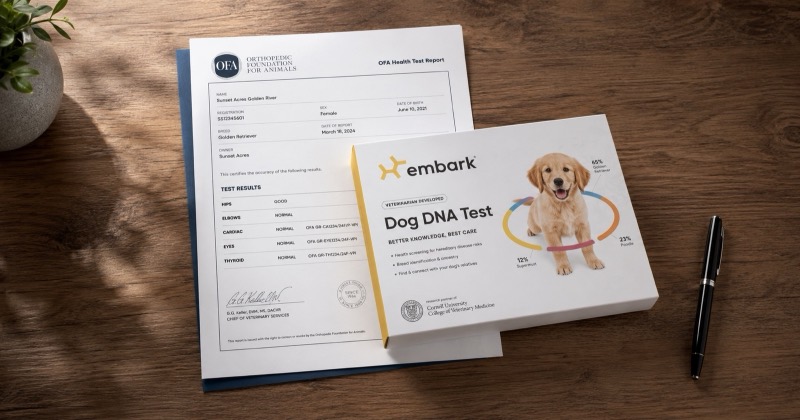
Do not treat “DNA clear” as a complete health program. DNA tests answer the questions they were built to answer. They do not replace physical examination, infectious-disease control, cardiac imaging where indicated, or a breed-specific plan developed with a veterinarian.
The Feline Veterinary Medical Association specifically points to preventive genetic and health testing, including echocardiographic screening for hypertrophic cardiomyopathy where appropriate. Your breed club, registry resources and reproductive veterinarian can help define the actual protocol for your breed. That protocol may change as the evidence changes.
Keep the source document for every result. Record the laboratory, test, date, result and cat identifier. A cropped screenshot that says “negative” without a name or date will not help you, a future breeding partner or a careful buyer.
Design the Cattery Around Disease Control and Daily Life
The most beautiful kitten room in the world is not a quarantine plan.
Before the first mating, decide how you will handle:
- A new cat entering the household.
- A cat returning from a show or outside breeding.
- A respiratory outbreak.
- A positive or uncertain infectious-disease test.
- A queen that needs privacy.
- A litter that requires isolation or supplemental care.
- Intact males whose housing and behavior change at maturity.
- Cleaning without moving contamination from one group to another.
The CFA minimum cattery standards address space, light, ventilation, sanitation, food, water and veterinary care. Treat a minimum as a floor. Your actual setup has to work at 2 a.m., during an illness, when laundry is backed up and when two groups cannot safely share tools or airspace.
Discuss FeLV and FIV testing, vaccination, parasite control, blood typing and the introduction of new cats with your veterinarian. Cornell's feline diagnostic guidance notes that FeLV/FIV testing and blood typing may be relevant in reproductive and fading-kitten investigations. That does not mean every test is used the same way in every cat. It means these decisions belong in a written veterinary protocol, not in a thread you search after a problem appears.
Create the Records Before There Is Anything Exciting to Record
If the only copy of a test result is buried in a text exchange with the cat's breeder, you do not have a record system. You have a future scavenger hunt.
Create one record for every cat. At minimum, keep:
- Call name and registered name.
- Registry and registration number.
- Microchip number.
- Date of birth, breed, color and sex.
- Sire, dam and pedigree.
- Owner, co-owner and breeding-rights documents.
- Vaccinations, examinations, medications and reproductive history.
- Genetic and phenotype health tests with source documents.
- Show titles and certificates.
- Pairings, due dates, litter outcomes and complications.
- Contracts, transfers and retirement or placement records.
Create one record for every litter too:
- Sire and dam.
- Breeding dates and method.
- Pregnancy and veterinary notes.
- Birth date, birth weights and identifying details.
- Daily weights during the period your veterinarian recommends.
- Treatments, concerns and outcomes.
- Kitten registration numbers and microchips.
- Buyer, contract, payment and transfer documents.
- Follow-up communication.
Back the records up. Give files consistent names. Keep the original reports, not only the values typed into a profile. CFA's breeder code of ethics explicitly includes maintaining appropriate cattery records and correctly registering litters and cats. Good records are not administrative polish. They are how a breeder sees patterns and proves what happened.
Build the Website Before You Have Kittens to Sell
The worst time to build a cattery website is when six kittens need to be weighed, the queen will not eat and your inbox is full of “How much?” messages.
Start while the program is quiet. A first version needs five things:
- Your identity. Your name, general location, cattery name and the registry or breed community you participate in.
- Your program. What you breed for, how the cats live and what you will not compromise.
- Your cats. Individual profiles with registered names, pedigrees, photographs and health results that a visitor can actually understand.
- Your process. How inquiries, applications, deposits, selection and pickup work.
- Your status. Whether you are planning a future litter, accepting inquiries or have no availability.
Do not manufacture urgency by filling the site with “available now” cards. A new cattery with no litter can say exactly that. “Our program is being established; no kittens are available” is more credible than pretending to be further along.
A website also gives you one durable source of truth. Instagram can show today's photograph. Facebook can introduce you to a group. Neither is a good place to maintain a cat's full health record, explain a placement process or keep a litter update findable six months later.
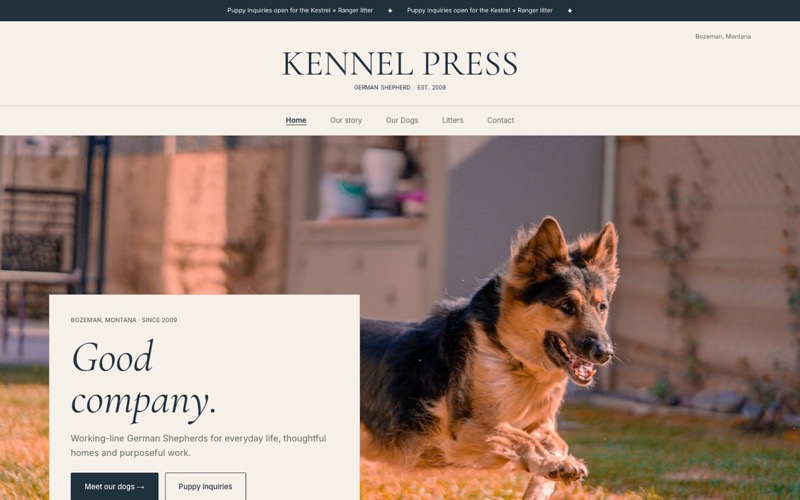
If you use Kennel Press for a cat breeder website, the cat profiles, litter pages, pedigrees and health-document links are already part of the structure. That is the useful part of breeder-specific software: it starts with the information buyers need instead of asking you to turn a restaurant template into a cattery.
Whatever platform you choose, buy a domain you control, use an email address on that domain and keep your registry name, website and contracts consistent.
Write the Buyer Documents Before You Accept a Deposit
A contract written after a buyer asks for their money back is not a contract. It is an argument with headings.
Have an attorney in your jurisdiction review the documents you will actually use. The kitten sales agreement should clearly address:
- The legal identities of buyer and seller.
- The specific kitten and registration status.
- Purchase price, deposit and payment schedule.
- What makes a deposit refundable or nonrefundable.
- Health records and the scope of any health guarantee.
- The buyer's veterinary-exam window.
- Spay/neuter or breeding terms.
- Pickup, transport and risk during transport.
- Return, rehoming and right-of-first-refusal terms.
- What happens if the selected kitten becomes unavailable.
- What support and paperwork the breeder will provide.
The TICA code used for its Outstanding Cattery program calls for a written sales agreement, a health guarantee, a prompt independent veterinary exam and ongoing breeder support. Those are useful operating principles even if you never apply for that designation.
Build the application and screening process at the same time. A responsible breeder is not trying to close every inquiry. You are trying to place each kitten in a home that understands the breed and will remain responsible for the cat after the novelty wears off.
Plan the First Litter From the Possible Emergencies Backward
The first pairing should be the end of your startup process, not the beginning.
Before breeding, you should be able to answer:
- Why these two cats?
- Which strengths and risks does each bring?
- Which health results support the decision?
- Who will provide reproductive veterinary care?
- Where will you go for an after-hours emergency?
- How much money is immediately available for complications?
- Who can physically help if you have been awake for 30 hours?
- Where will kittens be raised and socialized?
- What is the vaccination and veterinary schedule?
- When will kittens be ready to leave, and what determines readiness?
- What happens if no buyer is right for a kitten?
- What happens if a placed cat needs to come back in five years?
Do not take deposits to finance the pregnancy. If buyer money is required to pay for the emergency care that gets the litter safely to placement age, the financial order is backward.
Do not promise a kitten before you know what the litter contains or whether that kitten is thriving. You can maintain an inquiry list without turning unborn kittens into inventory.
And do not let an announced pairing pressure you into completing a breeding that no longer makes sense. A public plan can change. The cats do not owe the audience a litter.
A Practical Order of Operations
There is no universal calendar, but there is a sensible sequence.
Before buying foundation stock
- Choose the breed and learn its standard, temperament and health risks.
- Find a mentor and reproductive veterinarian.
- Attend shows and meet the breed community.
- Check local business, zoning and animal rules.
- Build a realistic budget and emergency reserve.
When establishing the program
- Register the cattery name and business as appropriate.
- Secure the domain and public accounts.
- Purchase cats with written breeding rights and documented history.
- Establish quarantine, health and sanitation protocols.
- Create the cat, litter, financial and buyer record systems.
Before the first mating
- Complete and verify every required health test.
- Have the pairing reviewed by people qualified to challenge it.
- Confirm routine and emergency veterinary coverage.
- Finish the contract, application and payment process.
- Publish the website with your cats, methods and honest current status.
- Prepare the physical space and supplies.
- Decide what would make you cancel or postpone the breeding.
Before the first kitten leaves
- Complete the veterinary and vaccination plan.
- Register and identify the kitten as promised.
- Provide the contract, health record, care instructions and registry paperwork.
- Require or strongly recommend the buyer's independent veterinary exam within the written window.
- Record the placement and schedule follow-up.
- Remain available after the sale.
What Most “Start a Cattery” Guides Get Wrong
They make the program sound like a checklist of purchases: register a name, buy cats, create social accounts, breed, sell kittens.
That is the retail version of the work. The real version is risk management.
You are managing genetic risk, infectious disease, pregnancy and neonatal risk, buyer expectations, legal obligations, cash flow and the lifetime welfare of animals you chose to produce. The photographs and kitten announcements are the visible part. The program is everything that makes those photographs defensible.
The breeders worth learning from are rarely the ones telling you how quickly you can get started. They are the ones slowing down at the places where a shortcut becomes somebody else's problem.
The Bottom Line
Registering a cattery name is a useful milestone. It is not evidence that the cattery is ready.
You are ready for the first litter when the pairing has a reason, the cats have the right evidence behind them, the veterinary and emergency plans exist, the records can survive a hard question, the buyer documents are finished, and you can keep every kitten without needing a sale to rescue the budget.
Build the website during that preparation, not after it. It should show the same thing the rest of the program shows: named cats, verifiable information, current plans and no need to hide behind vague claims.
If you are ready to put that information in one place, Kennel Press gives cat breeders a website built around cats, litters, pedigrees and health records. Start with the program. The website should make the work visible.