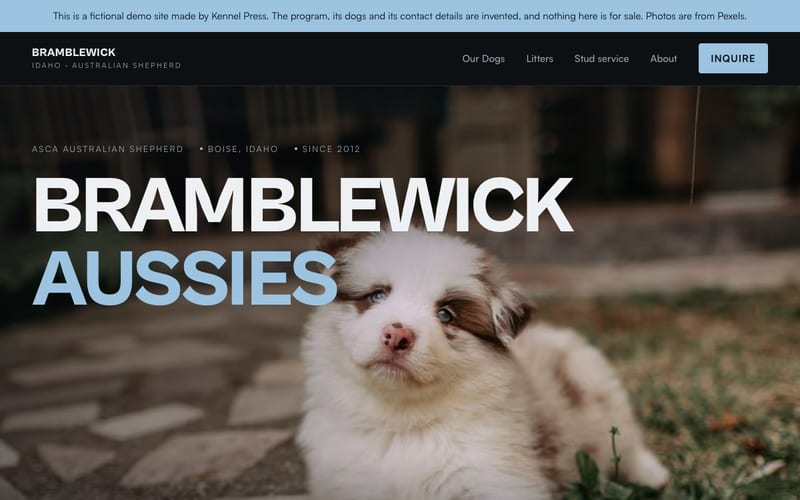
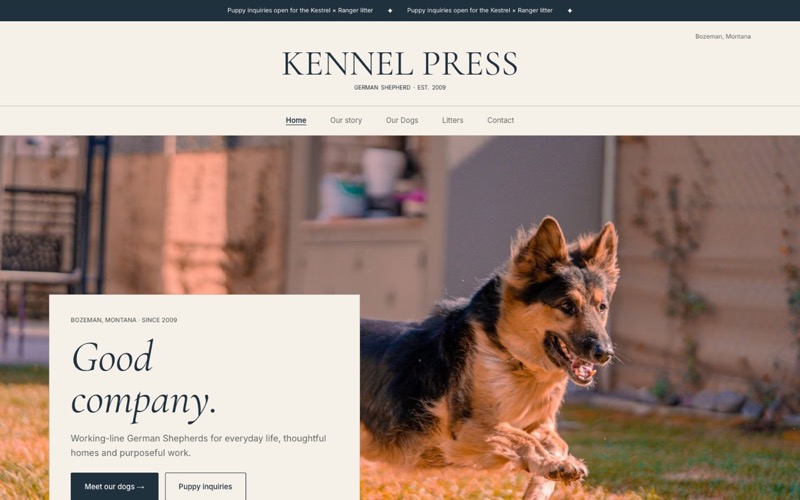
A polished website can belong to an excellent breeder. It can also belong to a scammer who copied the photographs yesterday.
A registry logo can mean the breeder participates in a real pedigree system. It does not mean the registry inspected every cat, approved every pairing or guaranteed the kitten you are looking at. A social account with years of photographs can be reassuring. It still does not replace a contract or health records.
The question is not whether a breeder has one convincing signal. It is whether the breeder's identity, cats, records and behavior agree with one another.
A legitimate breeder leaves a chain of evidence. The cattery name connects to a real person. The person connects to named adult cats. The adult cats connect to pedigrees and health results. The kitten connects to those parents and to a written agreement. The payment request connects to the same person or business. When you ask a specific question, the answer fits the documents you already saw.
That chain is what you are checking.
Who this is for: buyers looking for a pedigreed kitten, families trying to verify a cattery found through search or social media, and anyone who is being asked to send a deposit before they are certain who is on the other side.
Start With the Breeder's Identity, Not the Kitten Photograph
Scams are designed to make you fall in love before you slow down.
The kitten is available now. Someone else is interested. Shipping can happen Friday. The deposit holds her. The seller will answer every question except the one that establishes who they are.
Move the kitten photograph out of the center of the decision. Start with the breeder.
You should be able to identify:
- The breeder's name.
- The registered cattery name.
- The general location where the cats are raised.
- A working phone number and email address.
- The registry or registries used.
- The breed or breeds produced.
- The adult cats behind the litter.
Search the breeder's name and cattery name separately. Add the words “complaint,” “scam” and the breeder's state or country. Look for history, not just star ratings. A breeder may have few public reviews because they produce few litters. That is different from a breeder whose entire presence appeared last month.
Compare the name on the website, registry listing, contract, invoice and payment account. Minor differences can have reasonable explanations—a legal name, an LLC and a cattery name may all be involved—but the breeder should explain the relationship plainly.
TICA warns buyers that fraudulent sellers often withhold physical addresses or real names, avoid phone calls and create urgency around payment. The urgency is not proof of a scam by itself. It is a reason to slow down exactly when the seller wants you to speed up.
Verify the Registry Claim, Then Keep Verifying
If a breeder says they are TICA or CFA registered, check the relevant registry or ask the registry how the claim can be confirmed. Use the contact information you find through the registry's own website—not a phone number supplied in a screenshot.
Start with official breeder resources such as the TICA breeder listings. CFA and breed clubs may provide their own directories or referrals. A listing is useful because it connects the cattery to an established organization through a source the seller does not control.
But understand the limit.
A registered cattery name identifies a name in the registry. It does not automatically tell you that:
- The premises were inspected.
- Every breeding cat passed appropriate health screening.
- The current advertisement was posted by the real breeder.
- The kitten exists.
- The seller will honor the contract.
Even legitimate breeders can have copied websites, stolen photographs or impostor social accounts created in their name. Once you find an official listing, compare its contact details to the ones you are using. If they differ, contact the breeder through the official channel and ask whether the advertisement is theirs.
Registry status is one link in the chain. It is not the whole chain.
Look for Adult Cats With Names, History and Records
Scam sites sell kittens without showing where the kittens came from.
A real breeding program should be able to identify the sire and dam of a litter. You should see or receive their registered names, not only “Mom is a beautiful silver girl.” The breeder should be able to discuss their pedigrees, temperaments, ages and health screening.
On the website, look for:
- Individual profiles for breeding cats.
- Registered names and titles.
- Sire and dam information.
- Several photographs of the same cat over time.
- Health results identified by test and date.
- Litter announcements that name the parents.
- Retired cats or past litters, not only an endless grid of available kittens.
Then check whether the pieces agree. Does the color on the pedigree match the cat being advertised? Is the dam old enough to be the mother of the litter? Do the same adult cats appear across the website and older social posts? Does the breeder describe a small program while advertising kittens from six breeds?
The CFA's scam guidance specifically recommends looking for photographs of the breeder's adults and the place where the cats are housed. It also warns that sites showing an implausibly large number of immediately available kittens may be using photographs stolen from real breeders.
One reverse-image search is worth ten minutes of reading testimonials. Search the kitten's photograph and one or two adult-cat photographs. If the same image appears under different cattery names, breeds, locations or ages, stop until the breeder can resolve it.
Ask for Health Evidence, Not the Word “Tested”
“Health tested” can mean a full breed-appropriate program. It can also mean that the kitten saw a veterinarian once.
Ask the breeder which conditions matter in the breed and which tests were performed on each parent. A good answer is specific:
- The condition being screened.
- The type of test.
- The cat tested.
- The date and result.
- The laboratory, specialist or database that issued the result.
- Whether and when the screening must be repeated.
The right list differs by breed. Some inherited variants can be screened with DNA. Some conditions require examination or imaging. Some tests answer whether a cat carries a known variant but do not rule out every cause of the disease. There is no universal “clear panel” that makes every pairing responsible.
The Feline Veterinary Medical Association supports preventive genetic and health testing and gives echocardiographic screening for hypertrophic cardiomyopathy as one example. That distinction matters: a mail-in DNA panel and a cardiac ultrasound are not interchangeable just because both can appear under a “health tested” heading.
Ask to see the actual reports. Confirm that the registered name or microchip identifies the right cat. If a public database is used, look up the result yourself. Ask about negative information too:
- Have close relatives developed a condition relevant to the breed?
- Has the breeder ever removed a cat from the program because of a result?
- What does the health guarantee cover, for how long, and what is the remedy?
- What does the guarantee exclude?
A breeder who knows the line will not tell you that nothing has ever gone wrong. Cats are living animals, and no honest breeder can guarantee a life without illness. What the breeder can show is how risk is investigated, reduced, documented and handled when it appears.
TICA's buyer guidance recommends asking for health and genetic records for the sire and dam and reviewing the written health guarantee. That is a better standard than accepting a badge that says “vet checked.”
See How the Cats Live
You do not need a staged tour of every room. You do need enough current, verifiable access to understand how the cats and kittens are raised.
An in-person visit is useful when the breeder permits it and when disease-control rules allow it. Many careful breeders limit visitors around newborn or unvaccinated kittens. A restriction can be legitimate. Total secrecy is different.
If an in-person visit is not appropriate, ask for a live video call. During the call, ask to see:
- The kitten you are discussing.
- The kitten with littermates.
- The mother with the litter when appropriate.
- The everyday living area.
- A piece of paper showing your name and the current date if impersonation is a concern.
Live interaction is harder to steal than a photograph. It also lets you see whether the kitten, parent, room and breeder exist together.
Pay attention to what the breeder says about daily life. Where are kittens raised? How are they socialized? Which household sounds, people and routines do they encounter? How are new or returning cats quarantined? What veterinary practice sees the cats? What happens during an illness?
The answer does not need to sound clinical. It needs to sound like a person describing work they actually do.
Availability Should Make Biological Sense
Real breeders can have kittens available. The red flag is not availability. It is a supply that never changes and never seems connected to named adult cats.
Be cautious when a seller has:
- Many young kittens from a rare breed available at all times.
- Several breeds, every color and both sexes ready immediately.
- No past litters and no planned pairings, only product-style listings.
- The same kittens relisted for months without aging.
- A new litter every time you hesitate.
- A price far below the normal range paired with a shipping deadline.
Also be cautious with the opposite performance: a fake waitlist used only to create exclusivity. A six-month wait does not prove a breeder is ethical any more than immediate availability proves fraud.
What matters is whether the litter can be traced to actual parents, a birth date and a changing series of updates. The kitten should get older. The photographs should show the same markings. The breeder's explanation of selection and pickup should remain consistent.
A Good Breeder Screens You Too
Scammers qualify your payment method. Breeders qualify the home.
A serious breeder will usually want to know about:
- Other animals in the household.
- Children and the household routine.
- Indoor or outdoor plans.
- Veterinary history.
- Experience with the breed.
- Grooming, diet and activity expectations.
- Whether anyone in the home has allergies.
- What happens if you can no longer keep the cat.
The questions may feel personal because the breeder is making a placement decision, not processing an order. TICA's guidance explains that a knowledgeable breeder asks questions to decide whether the home is appropriate and remains interested in the kitten's welfare after placement.
Screening alone does not prove legitimacy. A scammer can copy an application. Look at the quality of the conversation. Does the breeder respond to your actual household, explain why a kitten may or may not fit, and show willingness to say no? Or does every answer lead back to sending the deposit today?
Someone willing to sell a kitten to anyone is telling you something about how the litter was planned.
Read the Contract Before You Pay
The contract should arrive before the money becomes nonrefundable.
At minimum, verify:
- The legal name and contact information of the seller.
- The kitten or the process for selecting one.
- The total price and deposit amount.
- Whether the deposit is refundable and under what conditions.
- What happens if the breeder cannot provide the kitten.
- Registration status and any breeding restrictions.
- Vaccination, microchip and veterinary records to be supplied.
- The health guarantee and buyer examination window.
- Pickup or transport arrangements.
- Return or rehoming obligations.
- Signatures and dates.
Do not confuse a severe contract with a good contract. A document can be six pages long and still protect only the seller. Read the remedy, not just the promise. If a covered condition is diagnosed, does the contract offer a refund, replacement kitten, veterinary contribution or nothing useful? Must you return a sick kitten to receive any remedy? Who pays transport? What evidence is required?
Ask questions in writing and keep the answers. If the breeder says a clause “does not really apply,” ask for the contract to say what both parties actually intend.
TICA's Pet Buyer's Guide recommends a written agreement with health-guarantee and return terms. The point is not that every breeder uses the same terms. The point is that the important terms exist before the transaction.
Treat the Payment Request as Another Identity Check
A legitimate breeder may accept several payment methods. No single app proves or disproves legitimacy. The pattern matters.
Stop and investigate if:
- The payment recipient is unrelated to the breeder or business and the explanation is vague.
- The seller insists on gift cards, cryptocurrency or a wire transfer.
- You are asked to split payments among several people.
- A new transport company demands surprise insurance, crate or climate-control fees.
- The seller will not issue an invoice or receipt.
- The amount or refund terms differ from the contract.
- Full payment is demanded before you can identify a specific kitten.
TICA specifically warns against wire transfers and gift cards and advises buyers to be wary of full payment before selecting a kitten. Use a payment method with a clear record and understand what buyer protection it does and does not provide.
Never let a payment deadline prevent one more verification call. A legitimate litter will not become more legitimate because the deposit cleared quickly.
The Kitten Should Not Leave Suspiciously Young
Very young kittens are easy for scammers to market because buyers respond to tiny faces. Early placement can also signal that the seller is trying to move kittens before appropriate development and veterinary care.
Ask for the kitten's date of birth and planned go-home date. Then ask what determines readiness: vaccination, veterinary examination, development, socialization, weight, spay/neuter policy and registry rules.
CFA's scam guidance identifies offers to release kittens at six to eight weeks as a warning sign. TICA's code for its Outstanding Cattery program requires at least two inoculations against panleukopenia, rhinotracheitis and calicivirus before release. Individual circumstances and veterinary protocols vary, but “the kitten is eating solid food” is not a complete readiness standard.
At handoff, expect the records promised in the contract. Depending on the agreement, that may include:
- Signed sales contract.
- Vaccination and veterinary record.
- Microchip information.
- Registration application or certificate.
- Pedigree.
- Food and care instructions.
- Spay/neuter documentation or terms.
- Written instructions for the buyer's first veterinary visit.
Have your own veterinarian examine the kitten within the contract's stated window. TICA tells buyers to expect a breeder to recommend an independent veterinary examination within a few days. That visit protects the kitten and gives both parties a dated record of its condition after transfer.
Red Flags That Matter Most
One awkward email is not proof of fraud. Several contradictions are.
The strongest reasons to stop are:
- The breeder will not provide a real name or live conversation.
- Registry contact information does not match and cannot be reconciled.
- The kitten cannot be shown live.
- Photographs appear on unrelated sites.
- The parents are unnamed or their records do not exist.
- “Health tested” cannot be connected to actual reports.
- The contract arrives after payment or not at all.
- The payment recipient changes unexpectedly.
- Surprise shipping charges appear after the first payment.
- The seller uses fear, guilt or a deadline to prevent verification.
- Dates, ages, colors, parentage or location change between conversations.
The common feature is not poor web design. It is broken continuity. The seller cannot connect the identity, cat, documents and transaction into one consistent story.
Green Flags That Carry Real Weight
Good signs are specific and verifiable:
- The breeder has a traceable identity and history in the breed.
- Registry and breed-club information agrees with the breeder's own site.
- Adult cats are named and documented.
- Health reports identify the actual breeding cats.
- The breeder can explain the limits of the testing performed.
- You can see the kitten live and understand where it is raised.
- Availability is tied to named litters and real dates.
- The breeder asks serious questions about your home.
- The contract is available before payment.
- Payment, invoice and contract identify the same person or business.
- The breeder discusses support and return obligations after placement.
- The breeder is willing to lose the sale rather than rush the placement.
No single item guarantees the future. Together they show a breeder whose claims can survive contact with evidence.
The Questions I Would Ask Before Sending a Deposit
You do not need to interrogate a breeder with 40 questions in the first email. You do need clear answers before money changes hands.
Ask:
- What is your registered cattery name, and which registry do you use?
- What are the registered names of this kitten's sire and dam?
- Which health conditions are relevant to this breed?
- Which tests were performed on each parent, and may I see the reports?
- May I see the kitten and mother on a live video call?
- What is the kitten's date of birth and expected go-home date?
- Which vaccinations, examinations and treatments will be completed first?
- What registration and pedigree documents will I receive?
- May I read the sales contract and health guarantee before paying?
- When is the deposit refundable, and what happens if you cannot provide the kitten?
- What do you require if I cannot keep the cat later?
- May I contact a previous buyer and the veterinary practice you use?
The goal is not to hear twelve perfect answers. It is to see whether the answers are knowledgeable, consistent and supported.
The Bottom Line
A legitimate cat breeder is not defined by a beautiful site, a registry badge, a long waitlist or an expensive kitten.
Legitimacy shows up in the connections: the real person behind the cattery, the named cats behind the kitten, the evidence behind the health claims, the terms behind the deposit and the ongoing responsibility behind the sale.
Use the breeder's website as the beginning of verification, not the end. A good cattery website should make the work easier by showing adult cats, pedigrees, health testing, current litters and a clear process in one place. It should give you more specific questions to ask, not ask you to trust the design.
If anything important cannot be connected, pause. The right breeder would rather answer one more careful question than take money from a buyer who is not comfortable with the placement.